
Behind the Good Image
Recently, Mirage Visualisation was ranked second architectural visualization studio in Bulgaria.
We are truly grateful to be included in this list and especially thankful to Artem Tkatchenko for featuring us on Archvizbase.
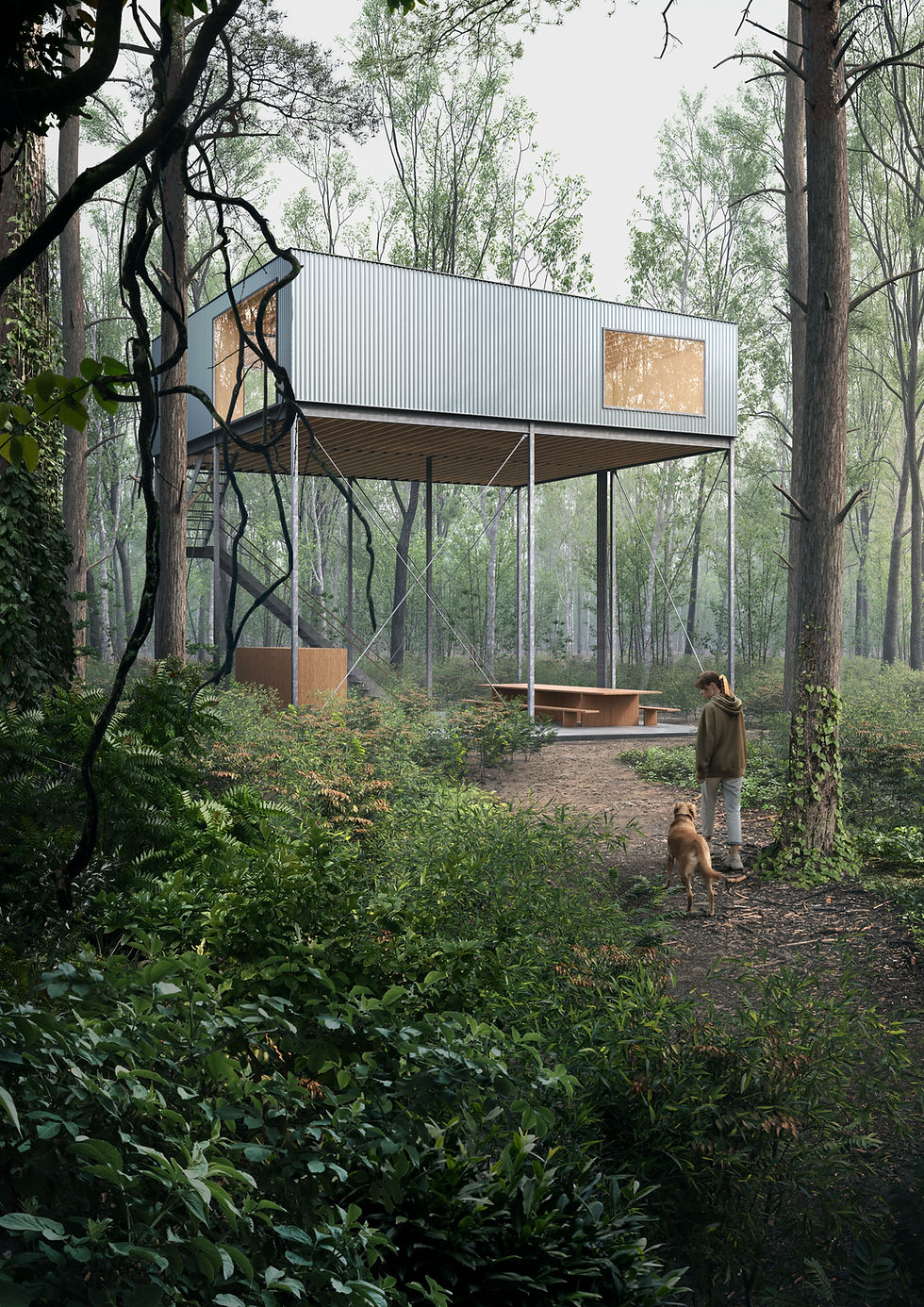
“Believable atmosphere. Calm confidence. Not loud effects.”
These words resonate with us because they reflect something that is rarely visible from the outside.
A good image is never just about the image.
It is about everything that happens before.
It Starts Before the Project Starts
An architectural visualization project does not begin in 3D.
It begins with alignment.
Client acquisition matters. Choosing who we work with matters. Understanding ambition matters.
We build a process before we build an image.
We define responsibilities. We clarify timelines. We structure communication.
Without structure, images become decoration.
With structure, they become strategic tools.
The Kickoff Meeting Is Critical
A strong project starts with a strong kickoff meeting.
We ask:
Who is the audience? What is the maturity of the architecture? What is fixed, and what is still open? When do we receive final files? When is architecture locked? When do we deliver?
Clarity here prevents compromises later.
Many problems in architectural visualization do not come from rendering.
They come from unclear expectations.
Exploration Before Production
Internally, we do not jump directly into production.
We align first.
Especially in competitions, projects are often unfinished.
Our role is not to “make it pretty.”
Our role is to explore.
Very often, the first work is not on the building.
It is on the surroundings.
Context.Landscape.Scale.Atmosphere.
Surroundings define credibility.Mood defines perception.
We collect references. Sometimes from the client. Often from our own internal research.
We propose framing. We propose atmosphere. We test perspectives.
This is not decoration.
This is direction.

Improving Without Distorting
At early stages, we are not here to exaggerate architecture.
We are here to understand how it wants to be seen.
In competitions especially, we sometimes see opportunities:
Better relationship with context. Clearer hierarchy. Stronger atmospheric intention.
Our responsibility is not to distort the project. It is to reveal its potential.
Using AI With Discipline
This year, part of our process evolved.
We use AI early, but with precision.
Only for mood testing.
Testing night scenes traditionally requires hours of lighting setup. Only to discover that night is not the right direction.
Instead, we test atmosphere quickly.
Low quality. Fast iterations.Clear separation from the real 3D work.
At the same time, we send medium quality renders of the real model to review:
Materials. Modeling accuracy. Architectural fidelity. Framing.


Mood discussions now happen early, when decisions are still flexible.
Not at the end, when architecture is fully detailed and time is limited.
Technology does not replace thinking. It accelerates clarity.
The Image Is Only the Visible Part
When final images are delivered, the project is not finished.
We collect feedback.We analyze what worked.We refine our internal standards.
We follow up on payments with the same rigor as we follow up on pixels.
We plan publications carefully.
Images live beyond delivery. On websites. On social platforms. In competitions. In portfolios.
A good image is not just produced.
It is built through decisions, alignment, discipline, and responsibility.
If our work feels calm, believable, and quietly premium, it is because the visible result is supported by an invisible structure.
That is what stands behind a good image.

Comments